Physics & Mathematics Mentorship
Problem solving with curiosity, creativity, and confidence.
I take on a small number of students each year for one-on-one work in physics and math, often focused on physics contests.
- Olympiad training
- Research projects
- Advanced coursework
- Standardized tests
- Qualifying exams
- Self-study

- BS, Physics, Caltech
- PhD, Physics, University of Maryland
- US Physics Team Coach, 2016 to 2021
- Former IPhO Team Leader, USA
- Professional Physics Curriculum Developer
About Mark
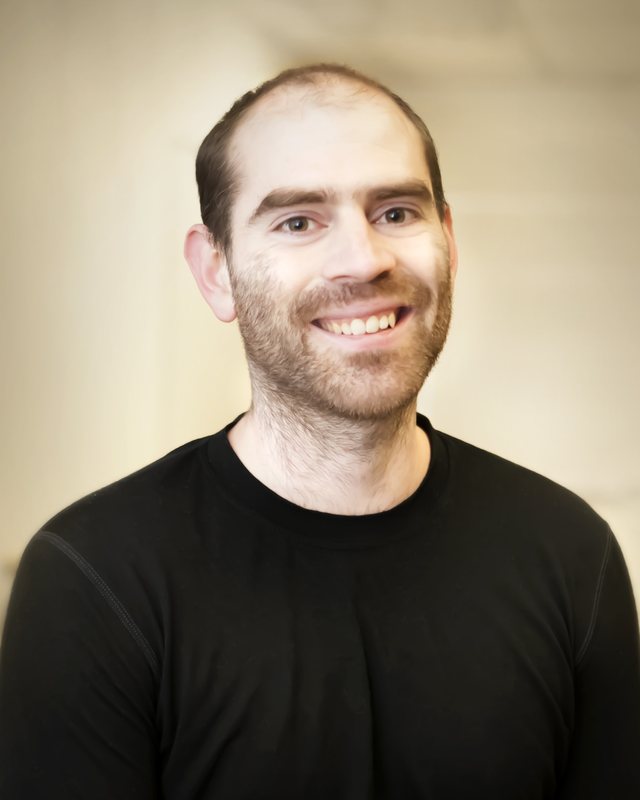
I'm always impressed by the creativity and resilience students show when they have a great problem to work on. Competition physics is full of great problems, and it's where I've spent most of my career.
From 2016 to 2021 I coached the US Physics Team, including as team leader at the International Physics Olympiad. I've helped write the F=ma and USAPhO exams and graded USAPhO. I bring that experience to preparing my students.
Since 2018 I've been a professional physics curriculum developer. I designed a well-known online olympiad training course, and I now lead a team writing physics courses that run from middle school through olympiad preparation.
My PhD at the University of Maryland was in physics education research. My thesis was about how students learn to use math to make sense of physical phenomena: when an equation means something to them, and when they're only moving symbols around. While I was there, I taught and helped design the introductory physics course for life-science majors.
I've been teaching physics since I was an undergraduate at Caltech. I've designed and taught physics and astronomy courses at Bucknell University, Johns Hopkins CTY, and the Stanford Pre-Collegiate Summer Institutes, and I've tutored private students from middle schoolers to adults.
I was also active for years answering physics questions online. You can read my answers on my Physics Stack Exchange profile and my Quora profile.
What I offer
I can work with you on school material, but for most students I provide a complete learning environment: readings, assignments, and mock exams that closely mimic the real tests. I also write a report summarizing our plan and recent progress every ten sessions. Our one-on-one video sessions are spent actively solving problems together. I'll answer your questions and make sure you understand the logistics of physics tests like the F=ma and USAPhO exams.
Live sessions
One-on-one over Google Meet, usually an hour, on a shared whiteboard built for physics: typed and handwritten math, diagrams, graphs, and calculators. It works on a laptop or an iPad.
A record of every session
After each session, a written summary and the whole whiteboard as a PDF go into your custom portal, so you can go back to any problem we worked.
Parents in the loop
Parents get their own portal login and emails with the plan, session summaries, reports, and invoices, and they can book a check-in call with me.
Problems picked for you
Problems chosen for you from past F=ma, USAPhO, IPhO, and EuPhO exams, national olympiads from around the world, and select textbooks. Olympiad problems come with IPhO-style answer sheets.
Homework and questions
You get homework picked for you after each session. You upload your work in the portal, and before we meet again I read it and give feedback, along with answers to any questions you email me.
Practice exams
Past F=ma and USAPhO exams and mock exams I've written, timed in the portal, with a question-by-question report we go over together. Your progress is automatically tracked and visualized.
Daily fluency drills
Five minutes a day of spaced practice on the formulas and math you need at your fingertips, so they don't slow you down on a contest.
Handouts written for you
When a topic needs more than a problem set, I write a handout on it, like matrices for olympiad physics or units inside logarithms.
A report every ten sessions
At the end of each block of ten sessions, we look back together and I write a report: our goals going in, what we did, and the goals for the next block.
Who I work with
- Olympiad students from a first F=ma exam through USAPhO and IPhO
- Research students who want a physicist to talk to about a project
- Students ahead of their classes self-studying AP Physics C, college-level mechanics and E&M, or the math physics needs
- Exam prep for AP Physics, the MCAT, and other standardized tests
- Graduate students studying for PhD qualifying exams
- Self-learners of any age working through a topic on their own
Former mentees' selected accomplishments
- IPhO Gold Medalists
- Regeneron STS Scholars
- Admission to top schools, including Harvard, MIT, Caltech, Stanford, and Johns Hopkins Medical School
How I teach
Physical meaning first
Even when a student has the math to do a problem, I start as close to the real phenomenon as I can, so physics doesn't turn into manipulating formulas. We look at extreme cases and check units before the heavy math, and we check the answer against our intuition after.
You do the reasoning
Most of a session is me asking questions and you figuring out the answers. When you're stuck, I give the smallest hint that gets you moving again. One of the best signs of progress is when you start catching your own mistakes.
Judgment, not only technique
Hard problems take judgment: what belongs in the model, how long to stay on a problem, and whether there's a shorter way than bashing through. When you get a problem right but it took a long time, we go back and find the shortcut together.
Every problem connects
Each problem we do is saved and tagged. When a technique shows up again in a new setting, we pull up the old problem and see how they're related.
Honest about difficulty
I won't tell you something is easy. Physics is hard, and when something that made sense in the textbook gets confusing on a hard problem, that's okay. It means you're learning.
A plan with dates on it
Each student has a written plan with goals tied to the calendar, like the F=ma exam in February. We measure what we've covered against it, I tell you if we start falling behind, and I change it as I learn what you need.
Questions
Are sessions online?
Yes. We meet on Google Meet and work on a shared whiteboard in the portal. A tablet helps, since we'll want to write equations and draw diagrams on the fly, but it isn't required.
How often should we meet?
I usually recommend one or two sessions a week. Before a contest, some students meet more often.
What does it cost?
$3,000 for a ten-session cycle. This includes ten hour-long one-on-one meetings, custom homework assignments between meetings, mock exams, my feedback on your work before each session, and a detailed report each cycle on our progress and goals for the upcoming cycle. It also includes unlimited questions by email between sessions. The half-hour intro session is free.
What if we need to cancel or reschedule?
Just let me know, or move the session yourself in the portal. I try to be as flexible as I can about cancellations, time changes, and extra sessions, since most students are balancing a lot of activities.
What happens in the intro session?
I like to hear about the student: their background, what interests them, and their goals. I'll answer your questions about how I work. If the student can join, I'm happy to meet them too.
When should a student start preparing for F=ma?
For students who put in a real study effort, it's typical to come close to passing the F=ma exam as a freshman, and to pass it and get invited to USAPhO as a sophomore. Some freshmen pass it, too.
Do I need to be at olympiad level already?
No. Some students come in with a contest in mind, and some just like physics and want more of it than school gives them. We start where you are.
Schedule a Trial
Free 30-minute intro session
Pick a time to meet with me. There's no commitment and no fee.
Or email directly: mark@eichenlaubphysics.com
Trial sessions are free. Ongoing mentorship is $300/hr.